A mature tree can add shade, privacy, and character to a property, but trees can also develop structural problems that are not always obvious from the ground.
In Northern New Jersey, wind, heavy rain, snow, ice, age, root disturbance, and disease can all affect tree stability over time. Some warning signs are easy to spot, while others require a closer professional evaluation.
Knowing what to look for can help homeowners and property managers address hazards before a branch or entire tree fails unexpectedly.
Large Dead Branches Deserve Attention
Deadwood is one of the clearest warning signs.
A dead branch no longer has the flexibility or internal strength of living wood. Over time, it can become brittle and more likely to break during wind, snow, or ice.
The level of risk depends partly on where the branch is located.
A large dead limb over a roof, driveway, walkway, parking area, or play space deserves more immediate attention than similar deadwood over an unused section of a property.
Cracks Can Signal Structural Weakness
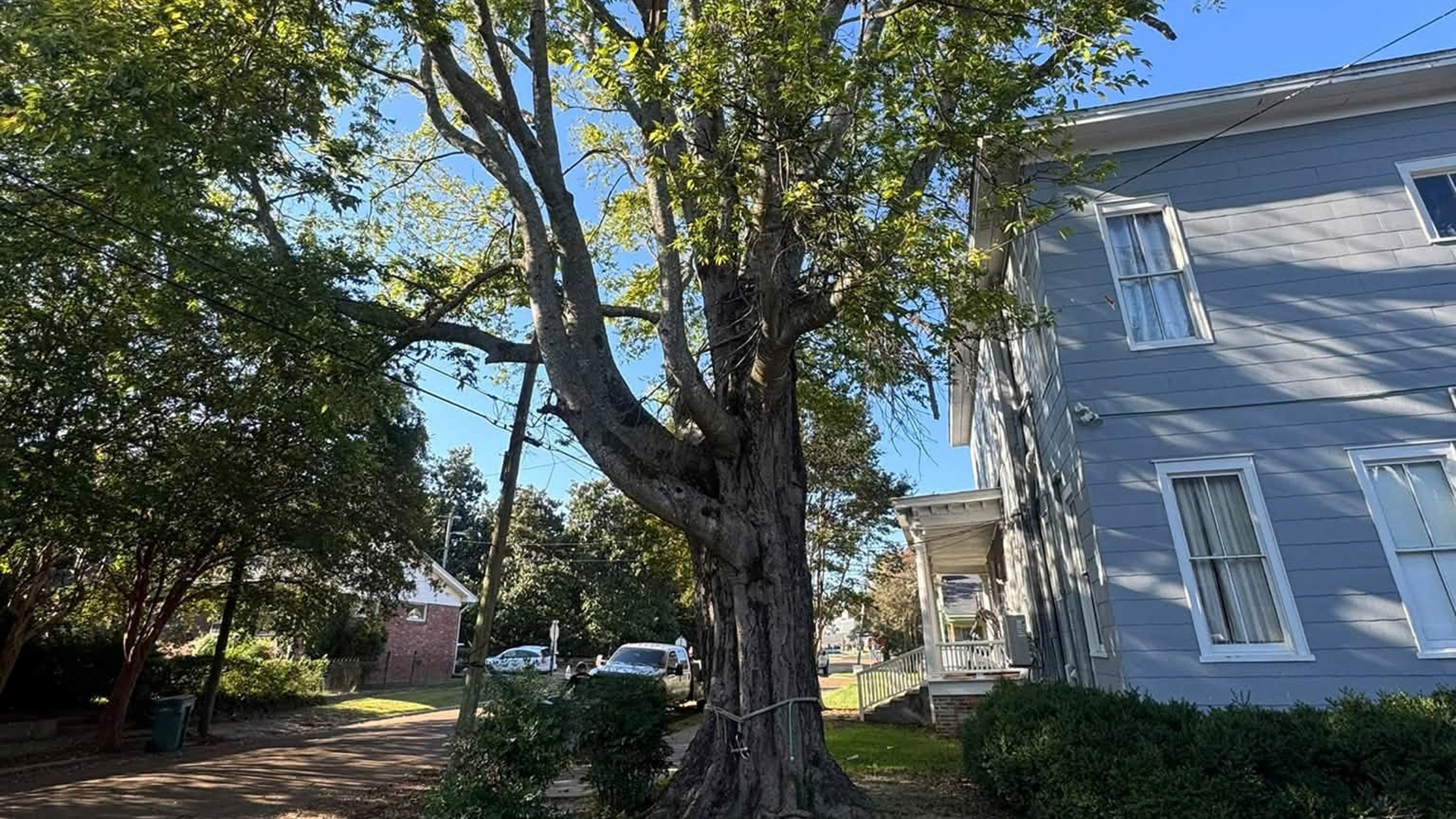
Cracks in the trunk or major branch unions should not automatically be ignored.
Some trees live for years with old, stable defects, while others develop active cracks that continue to widen.
Pay particular attention to deep splits, cracks between major stems, or openings that appear after a storm.
These areas may indicate that the tree is carrying weight unevenly or that two sections are beginning to separate.
A Sudden Lean Can Be Serious
Not every leaning tree is dangerous.
Some trees naturally grow at an angle and remain stable for decades.
A new or increasing lean is different.
If a tree suddenly shifts, especially after heavy rain or a windstorm, the roots or surrounding soil may have been disturbed.
Look for lifting soil, new cracks in the ground, exposed roots, or movement around the base of the tree. Those signs may indicate a more urgent stability problem.
Root Problems Can Be Hidden
Roots provide the tree's structural foundation.
Construction, trenching, driveway work, soil compaction, erosion, and repeated vehicle traffic can all damage roots without immediately affecting the canopy.
The tree may continue looking healthy for a period of time even though its support system has been weakened.
Root decay can also be difficult to see.
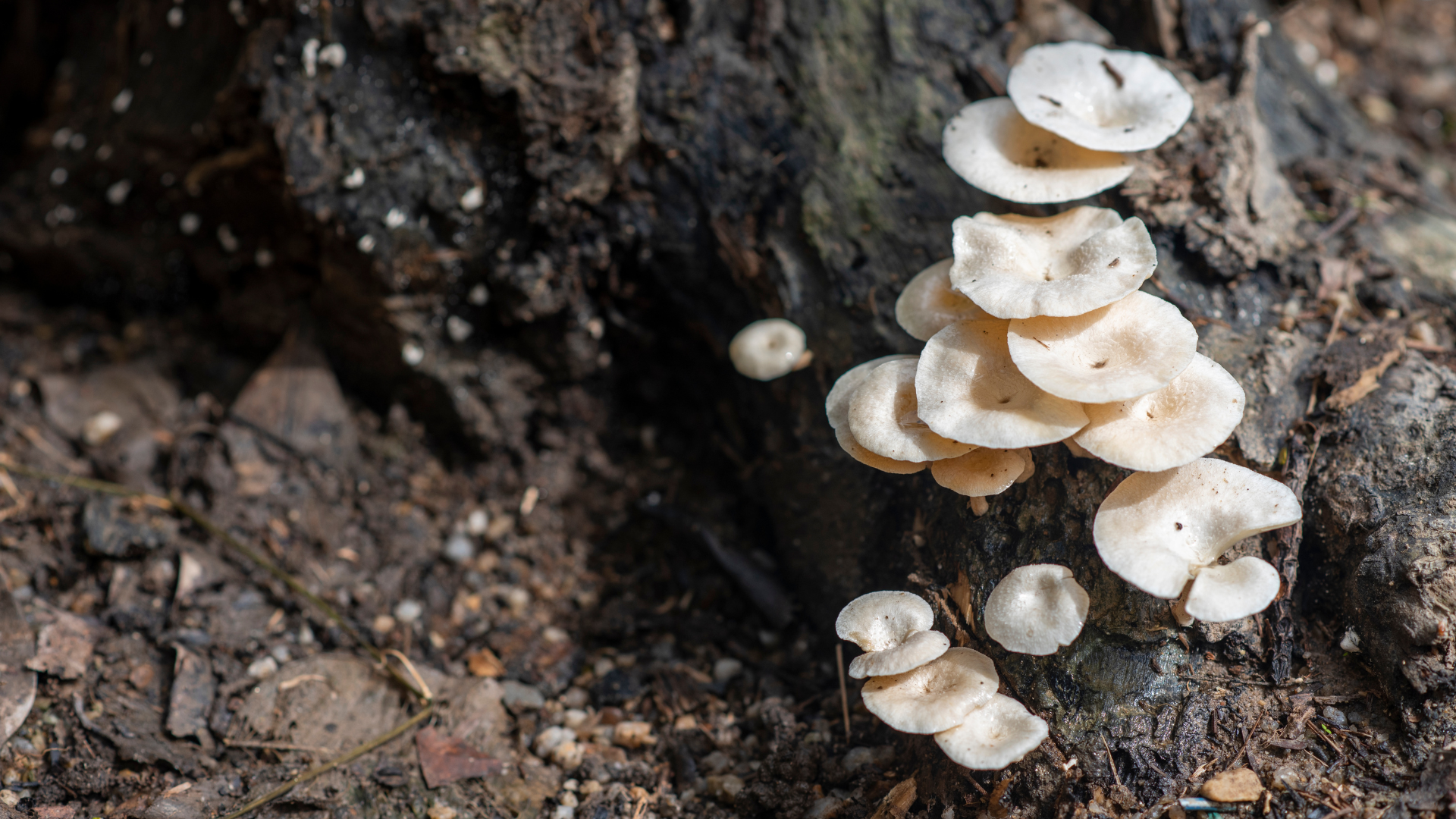
Mushrooms or fungal growth near the base, soft wood, cavities, or unusual movement around the trunk may justify a professional inspection.
Cavities and Decay Need Context
Hollow areas do not automatically mean a tree needs to be removed.
Many mature trees can remain standing with some internal decay.
The important questions are how much sound wood remains, where the cavity is located, how large the tree is, and what would be damaged if part of it failed.
Decay near the base or a major structural union can be more significant than a small cavity in a less critical area.
This is why tree risk should be evaluated as a complete picture rather than based on a single defect.
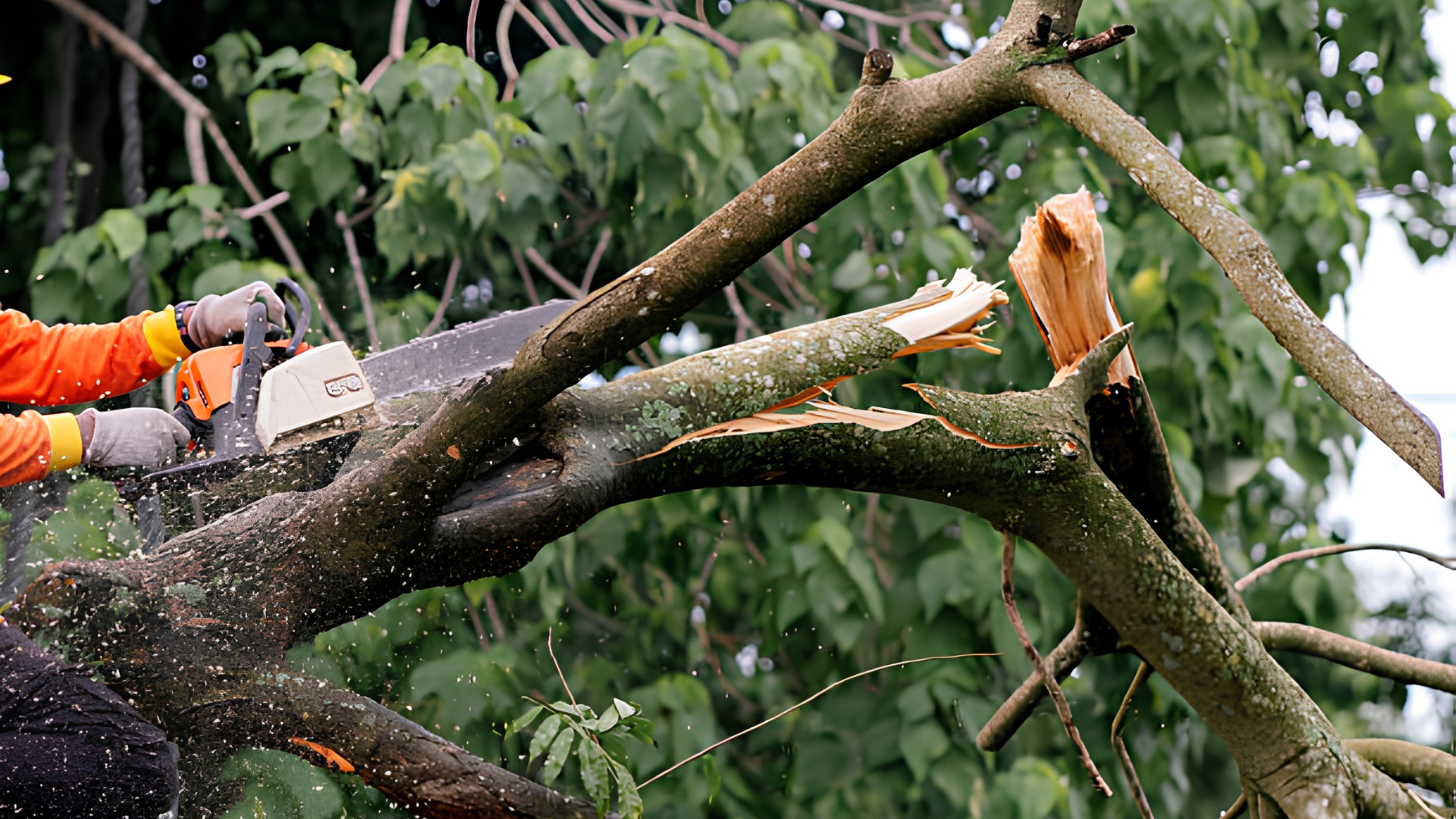
Hanging Limbs Are an Immediate Concern
Broken branches that remain suspended in the canopy can be especially hazardous.
Sometimes called hangers, these limbs may fall without much warning.
Wind, rain, or even normal branch movement can be enough to dislodge them.
Do not stand beneath a hanging limb or attempt to pull it down with ropes or improvised tools.
Professional removal is much safer, particularly when the branch is large or high in the canopy.
Storm Damage Can Change Risk Quickly
A tree that appeared stable before a storm may look very different afterward.
High winds can split branch unions, twist limbs, expose roots, or create cracks that were not present before.
Heavy snow and ice can also overload branches.
After severe weather, it is worth checking large trees near structures and high-use areas even if nothing has completely fallen.
Early damage may be easier to address before the next storm arrives.
Have Questionable Trees Evaluated
No single symptom automatically means a tree must come down.
Some trees can be made safer through pruning, deadwood removal, weight reduction, or ongoing monitoring. Others may have enough structural deterioration that removal becomes the more responsible option.
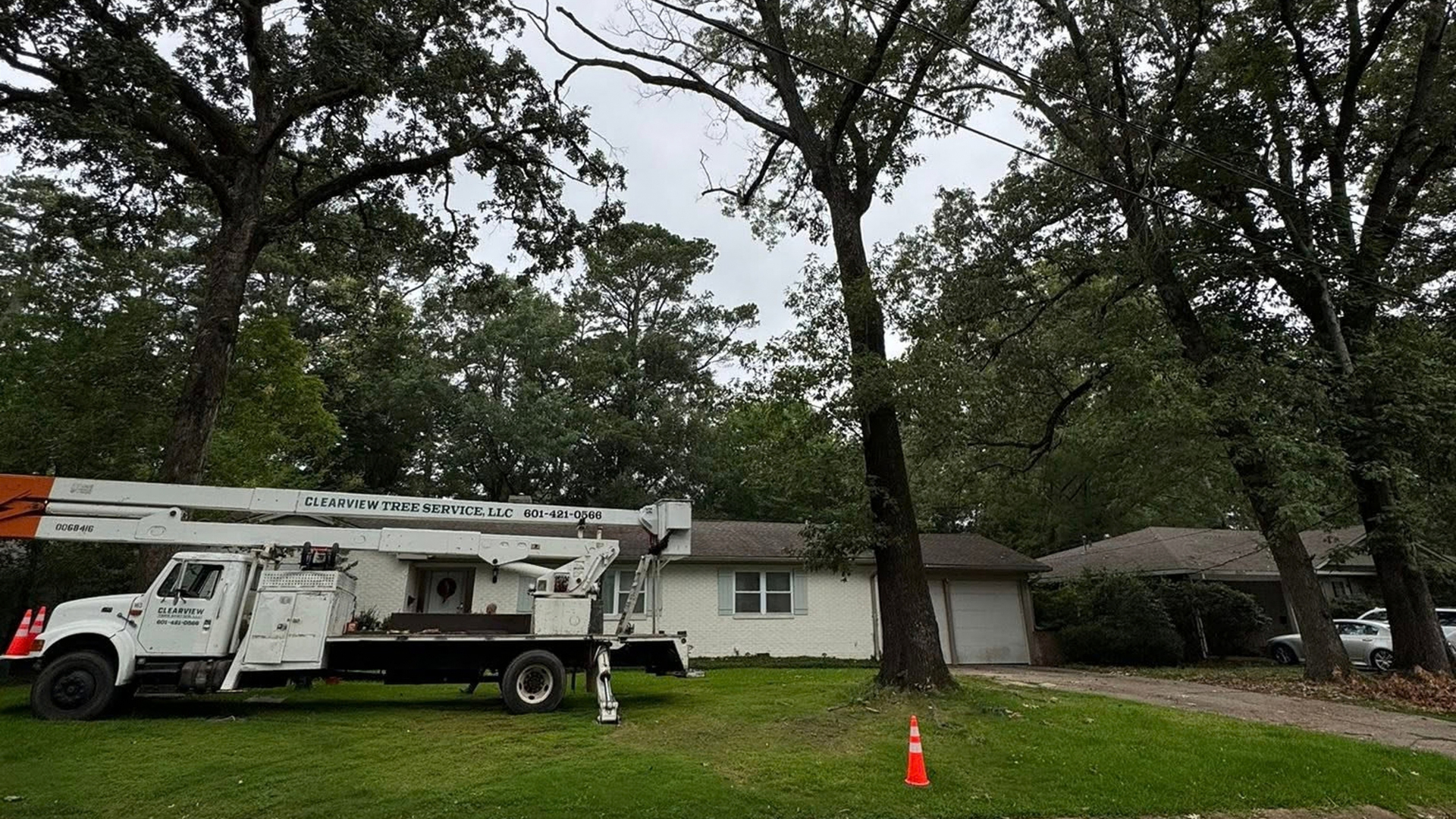
Clearview Tree Service provides residential and commercial tree care throughout Northern New Jersey, including tree removal, pruning, stump grinding, storm cleanup, and 24/7 emergency tree service.
With more than 20 years of experience, modern equipment, and a safety-focused approach, Clearview Tree Service can evaluate damaged or questionable trees and recommend the appropriate next step.
If you notice dead limbs, cracks, a sudden lean, root movement, decay, or storm damage, contact Clearview Tree Service for a free estimate before the problem becomes an emergency.